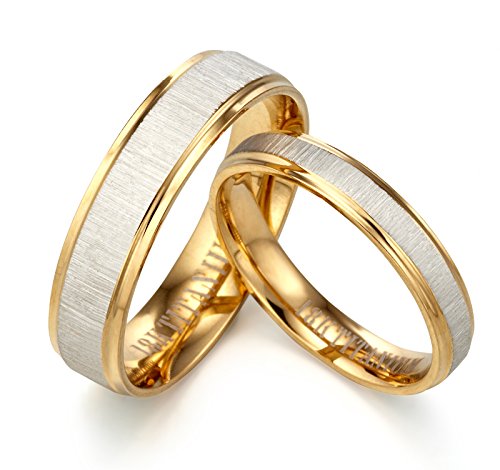
His and Hers Wedding Band Sets: A Complete Buying Guide
"Find the perfect pair. Compare metals, styles, and matching options to choose wedding bands that reflect your relationship."
Choosing wedding bands is one of the most meaningful decisions you will make as a couple. His and hers wedding band sets allow you to express your commitment with rings that complement each other while reflecting your individual tastes. Whether you prefer an identical match or a coordinated pair with subtle differences, the right set serves as a daily reminder of your marriage.
This guide covers everything you need to know before buying—from metal options and style considerations to fit and long-term care. By the end, you will have the information to shop confidently and choose bands you will love wearing for decades.
Why Choose His and Hers Wedding Band Sets?
Matching or coordinated wedding bands offer several practical and emotional benefits. They create a visual connection between you and your partner, symbolizing your unity in a way that individual rings cannot. They also simplify the shopping process, as many jewelers design sets that are meant to be purchased together.
Beyond symbolism, sets often ensure consistent metal types and finishes, which can matter for couples who want their rings to age in similar ways. A matching set also makes it easier to coordinate with engagement rings if the bride is pairing her wedding band with an existing engagement ring set.
Matching Does Not Mean Identical: Many his and hers sets share a design motif or metal but differ in width, finish, or detail. This allows each partner to have a ring that feels personal while still creating a cohesive pair. For example, a couple might choose the same brushed gold finish but select different widths for comfort and style.
For couples who want a more personalized approach, exploring luxury wedding ring options or real diamond engagement rings can open up additional possibilities for creating a truly unique set. Many couples also browse his and hers wedding ring sets and bridal ring sets for couples to compare coordinated designs.
Choosing the Right Metals
The metal you choose affects the ring's appearance, durability, weight, and maintenance requirements. The most common options for his and hers sets are gold, platinum, and alternative metals like titanium and tungsten carbide. Here is how the market generally breaks down by tier.
| Metal | Tier | Characteristics |
|---|---|---|
| Yellow, White, or Rose Gold | Mid-Range | Classic and versatile. 14K and 18K gold are common options. White gold is often rhodium-plated for a bright finish; rose gold offers a warm, romantic tone. Suitable for most couples. |
| Platinum | Premium | Dense, durable, and naturally white. Develops a patina over time that many couples appreciate. Requires minimal maintenance and is an excellent choice for daily wear. |
| Palladium | Mid-Range | A lighter, less dense alternative to platinum. Naturally white and hypoallergenic. A practical choice for couples who want platinum-like durability without the weight. |
| Titanium | Entry-Level | Lightweight, strong, and corrosion-resistant. Often chosen by couples who prefer a modern, practical feel. Cannot be resized in most cases. |
| Tungsten Carbide | Entry-Level | Extremely scratch-resistant and durable. Has a substantial weight and a dark, gunmetal appearance in many designs. Cannot be resized. |
For a deeper look at men's ring options, see our guides on wedding rings for him, tungsten carbide rings, and 24K gold wedding bands for men. If you prefer gold, explore wedding bands for men in gold and gold and diamond wedding bands for men.
Mixing Metals in His and Hers Sets
It is entirely acceptable—and increasingly popular—for couples to choose different metals for their bands. For example, one partner might prefer the warmth of yellow gold while the other prefers the modern look of white gold or titanium. The key is to ensure the overall aesthetic feels intentional rather than mismatched. Choosing the same finish (such as brushed or polished) across different metals can help tie the set together.
Our guides to gold and white gold wedding bands and men's gold and white gold bands provide additional insight into how these metals compare side by side.
Matching Styles and Finishes
Style is where his and hers sets become truly personal. You can choose an identical design in different widths, or select complementary designs that share a visual theme. Here are the most common approaches.
The Classic Match
Identical designs in the same metal, with widths adjusted for each partner's hand size. This is the most traditional approach and creates an unmistakable visual pairing.
Complementary Designs
Rings that share a motif—such as the same milgrain edge or channel-set stones—but differ in overall style. One may be more ornate, the other more streamlined.
Finish Contrast
Couples might choose the same metal but different finishes: polished for one, brushed or matte for the other. This adds subtle individuality while keeping the pair connected.
Stone Accents
Diamond accents can be added to one or both rings. A common approach is to set stones in the bride's band and keep the groom's band plain or with a single subtle accent.
Modern Minimalist
Sleek, unadorned bands in titanium, tungsten, or white gold. Ideal for couples drawn to a modern minimalist wedding aesthetic.
Vintage-Inspired
Milgrain detailing, engraved patterns, or filigree designs that evoke a classic, old-world feel. These pair beautifully with vintage wedding dresses.
If you are pairing your wedding band with an existing engagement ring, consider a band that complements the setting of your white gold engagement ring or round diamond engagement ring. The goal is a cohesive look that feels intentional and elegant. Couples who prefer a complete matching package often browse his and hers wedding bands sets and wedding bands and engagement ring sets to find coordinated options.
Comfort, Fit, and Width
Wedding bands are worn every day, so comfort is essential. Width, profile, and fit all affect how a ring feels over time. Most men's bands range from narrow to wide widths, while women's bands are typically narrower to pair with engagement rings.
- Width: Narrower bands are lighter and more delicate; wider bands feel more substantial. Couples often choose matching widths, but it is entirely acceptable to choose different widths for comfort.
- Profile: The shape of the band's cross-section affects comfort. Flat profiles feel modern, while domed profiles are classic and comfortable for daily wear.
- Fit: Standard fit bands slide on easily; comfort-fit bands have a rounded interior that feels smoother on the finger. Comfort fit is a popular choice for men's bands.
- Sizing: Get sized professionally, ideally at the same time of day and in a similar temperature to when you will wear the ring. Remember that fingers can change size over time.
💡 Practical Tip: If you are choosing rings that cannot be resized—such as titanium or tungsten carbide—be especially careful with sizing. Order a ring sizer or visit a jeweler to confirm the fit before purchasing. For metals that can be resized, such as gold and platinum, minor adjustments are usually straightforward.
Couples often wonder about ring placement. If you are unsure which finger the wedding band goes on, our guide to which finger a wedding band goes on and the tradition of the ring on the fourth finger provide helpful background.
How to Choose Your Set
With so many options available, it helps to approach the decision systematically. Here is a step-by-step approach to choosing his and hers wedding band sets.
- Discuss your priorities: Talk about whether you want an exact match, a coordinated pair, or entirely individual rings. Agree on the level of coordination that feels right for both of you.
- Set a budget range: Wedding bands vary widely by metal and design. Decide on a comfortable range and prioritize the features that matter most to you. For broader context, see our guide to the average cost of a wedding.
- Choose a metal: Consider durability, color, weight, and whether you want the option to resize in the future. Gold and platinum offer resizing flexibility; titanium and tungsten do not.
- Try on rings: If possible, visit a jeweler to try on different widths and profiles. How a ring feels on your hand is just as important as how it looks.
- Consider future maintenance: White gold requires periodic rhodium plating; platinum develops a patina; titanium and tungsten are low-maintenance. Choose a metal that fits your lifestyle and willingness to maintain it.
- Review the return policy: Before purchasing, confirm the jeweler's return and exchange policy, especially for engraved or custom-order rings.
For additional perspective on men's styles, our guides to white gold wedding rings for him and wedding rings with diamonds for men cover design options and practical considerations. Couples comparing stone-set styles may also enjoy white gold and diamond wedding bands and 14K white gold wedding bands.
Ring Care and Maintenance
To keep your wedding bands looking their best, regular care is important. The specific maintenance depends on the metal, but a few universal practices apply.
- Clean regularly: A soft cloth and mild soap solution are safe for most metals and gemstones. Avoid harsh chemicals, especially on plated rings.
- Store safely: Keep rings in a lined jewelry box when not wearing them. This prevents scratches and keeps them secure.
- Remove for certain activities: Take off rings during heavy lifting, swimming, or cleaning with harsh chemicals. This is especially important for plated or softer metals.
- Inspect periodically: Check for loose stones or signs of wear. Address minor issues before they become major problems.
If you are planning other details for your wedding day, our wedding emergency kits guide covers items that can help with last-minute needs, including ring-related concerns. And if you are planning a vow renewal, the vow renewal ceremony guide can help you think through how rings fit into the occasion.