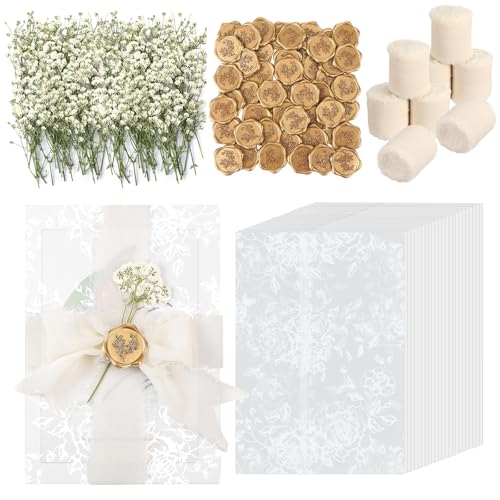
Wedding Invitations: Your Guide to Perfect Stationery
"Your first impression as a couple. Learn how to choose, word, and design invitations that set the perfect tone for your celebration."
Your wedding invitation is more than just a piece of paper; it is the first tangible glimpse your guests will have into your wedding day. It sets the tone for the entire event, whether it's a formal black-tie affair, a relaxed beach celebration, or an intimate garden party. A well-designed invitation communicates not just the who, what, and where, but also the style and mood of your upcoming nuptials.
Navigating the world of stationery can feel overwhelming, from choosing the right paper weight to mastering the complex rules of wording. This comprehensive guide is designed to demystify the process, providing you with the knowledge and confidence to create invitations that are both beautiful and appropriate. We'll walk you through the essential steps, from establishing a timeline to selecting the perfect design elements.
The Invitation Timeline: When to Send
Timing is everything when it comes to wedding invitations. Send them too early, and guests might forget; send them too late, and you risk low attendance. The standard rule is to mail your invitations 6 to 8 weeks before your wedding date. This gives guests ample time to request time off work, arrange travel, and book accommodations. It also gives you a buffer to track down those who forget to RSVP.
📅 Save the Dates: For a standard wedding, send save-the-dates 6 to 8 months in advance. For a destination wedding or a wedding during a major holiday weekend, send them 9 to 12 months in advance to give guests extra planning time. For more on this, check out our guide on save-the-date cards.
The Anatomy of a Wedding Invitation Suite
A wedding invitation "suite" is the collection of all the printed pieces that are mailed together in one envelope. While the main invitation is the star, the supporting pieces provide crucial details and add to the overall presentation.
The Main Invitation
This is the central card that formally requests the guests' presence. It includes the names of the hosts, the bride and groom, the date and time, and the location of the ceremony. It is typically the largest and most ornate card in the suite.
The RSVP Card
A small card that guests return to indicate whether they will attend. It usually includes a line for the guest's name, checkboxes for accepting or declining, and sometimes meal choices. A pre-stamped, pre-addressed return envelope is a thoughtful inclusion.
Reception Card
If the ceremony and reception are in different locations, a separate reception card is often included. It provides the details for the party after the ceremony, including the address and start time.
Details & Accommodations
This insert card provides guests with additional information, such as hotel room blocks, directions, dress code, and a link to your wedding website. It's a great way to keep the main invitation clean and uncluttered.
Wedding Invitation Wording & Etiquette
The wording of your invitation is steeped in tradition, but modern couples have the freedom to adapt it to their unique circumstances. The most important rule is to clearly state who is hosting the event, as this dictates the traditional wording.
Who is Hosting?
The "host" is the person or people paying for the wedding. Traditionally, the bride's parents are listed at the top. However, many modern couples pay for their own wedding or split costs with both sets of parents.
Traditional (Bride's Parents Hosting)
Mr. and Mrs. John Smith
request the pleasure of your company
at the marriage of their daughter
[Bride's Name]
to
[Groom's Name]
Modern (Couple Hosting)
[Bride's Name]
and
[Groom's Name]
request the pleasure of your company
at their wedding celebration
For a deeper dive into all the variations, including how to include divorced parents, same-sex couples, or a non-traditional ceremony, our detailed article on wedding invitation wording is an essential resource.
💡 Etiquette Tip: Always spell out all names, dates, times, and addresses in full. Use "and" instead of an ampersand (&) in formal wording, and "half past" instead of "30" when stating the time. These small details are hallmarks of a properly worded formal invitation.
Choosing Paper, Printing & Design
The physical quality of your invitation speaks volumes. The paper weight, texture, and printing method all contribute to the overall impression. For a formal wedding, a heavier cardstock (120lb or more) with a letterpress or engraving printing method is traditional and luxurious. For a more casual or budget-friendly wedding, a high-quality digital print on a slightly lighter cardstock can be equally beautiful.
When selecting your design, consider the wedding decor and color palette. Your invitations are a sneak peek into your theme, so echoing the colors or motifs you'll use on the big day creates a cohesive feel. A stationery designer can create a custom suite that perfectly reflects your personality as a couple.
Digital vs. Paper: The Modern Dilemma
In an increasingly digital world, the question of paperless invitations is more relevant than ever. Digital invitations, sent via email or a wedding website, are environmentally friendly and can be a smart, budget-conscious choice. They allow for easy tracking of RSVPs and can be updated in real-time.
However, for many, the tradition and formality of a physical invitation are irreplaceable. A paper invitation is a keepsake, a tangible memory of your wedding that guests can hold onto. For a formal wedding, paper is still the expected standard. A great compromise is to send a beautiful paper invitation for the main event and use your wedding website for RSVPs and additional details.
Smart Strategies for Your Stationery
Stationery can be a significant part of your overall wedding budget. Here are a few smart strategies to keep costs manageable without sacrificing style:
- Prioritize: Spend more on the main invitation that everyone will keep, and save on the RSVP and enclosure cards.
- Consolidate: Instead of a separate reception card and details card, combine all the information onto one well-designed insert.
- Consider DIY: If you are crafty, consider printing your own invitations at home using a high-quality printer and cardstock. You can find excellent templates online.
- Order Extras: It's always wise to order 10-15% more invitations than your guest list to account for last-minute additions and mistakes.
For a complete overview of the stationery ordering process, our wedding planning checklist is a great tool to keep you on track.