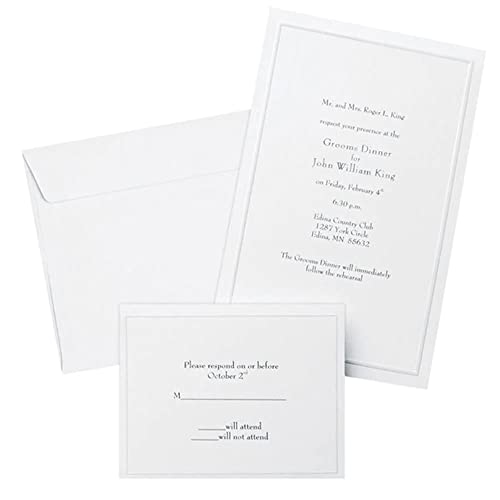
Wedding Invitation Wording: The Complete Etiquette Guide
"Set the tone for your big day with perfectly worded invitations. From formal to casual, we have examples for every situation."
Your wedding invitation is the first glimpse guests get of your celebration. It sets the tone, communicates important details, and creates excitement. But with so many family dynamics and etiquette rules to consider, finding the right words can feel overwhelming.
This comprehensive guide walks you through every scenario—from traditional formal wedding invitations to modern, casual phrasing. Whether parents are hosting, you're paying for everything yourselves, or you're navigating complex family situations, you'll find clear examples and practical advice below.
💡 The Golden Rule of Invitation Wording: Your invitation should clearly communicate who is hosting (who is paying for the wedding). The host's names traditionally appear at the top of the invitation. This isn't about formality—it's about clarity and respecting tradition.
Why Invitation Wording Matters More Than You Think
According to wedding etiquette experts, your invitation wording tells guests several things before they even read the date: the formality of your event, who is hosting, whether the ceremony is religious, and the overall style of your celebration. A mismatched tone—like an ultra-formal invitation for a backyard barbecue—can confuse guests about what to wear and what to expect.
What Your Wording Communicates
- Formality level (formal vs. casual)
- Hosting party (who is paying)
- Ceremony type (religious or civil)
- Guest dress code expectations
- Overall wedding vibe and style
Before You Start Writing
- Confirm who is hosting/paying
- Discuss parent name preferences
- Decide on formality level
- Check ceremony location type
- Review your wedding timeline
Traditional Wording: Bride's Parents Hosting
This is the most classic invitation format. The bride's parents (traditionally the hosts) are named first, followed by the request line, then the couple's names. This format is still widely used and beloved for its elegance and clear hierarchy.
FORMAL RELIGIOUS CEREMONY (CHURCH)
request the honor of your presence
at the marriage of their daughter
Emily Rose
to
Michael David Williams
Saturday, the fifteenth of June
two thousand twenty-six
at four o'clock in the afternoon
St. Mary's Catholic Church
Austin, Texas
FORMAL CIVIL OR OUTDOOR CEREMONY
request the pleasure of your company
at the marriage of their daughter
Emily Rose
to
Michael David Williams
Saturday, June 15, 2026
at four o'clock in the afternoon
The Wildflower Estate
Austin, Texas
Modern Wording: Couples & Joint Hosts
Today, many couples host their own weddings or share hosting duties with both sets of parents. Understanding who pays for what will help you choose the correct wording. Here are the most common modern formats.
COUPLE HOSTING ALONE
Emily Rose Thompson
and
Michael David Williams
invite you to celebrate their marriage
Saturday, June 15, 2026
at four o'clock in the afternoon
The Wildflower Estate
Austin, Texas
BOTH PARENTS HOSTING TOGETHER
and
Mr. and Mrs. David Michael Williams
request the pleasure of your company
at the marriage of
Emily Rose Thompson
and
Michael David Williams
Saturday, June 15, 2026...
INFORMAL / CASUAL WEDDING
together with their families
invite you to celebrate their wedding
Saturday, June 15, 2026
at four o'clock in the afternoon
The Wildflower Estate
Austin, Texas
Dinner and dancing to follow
Divorced, Remarried & Blended Families
Navigating divorced or remarried parents requires sensitivity. The key is to honor everyone involved while keeping the invitation clear and respectful. Managing family dynamics starts with the invitation.
DIVORCED PARENTS (MOTHER NOT REMARRIED)
and
Mr. James Robert Thompson
request the honor of your presence...
MOTHER REMARRIED (STEPFATHER)
and
Mr. James Robert Thompson
request the pleasure of your company...
BOTH PARENTS REMARRIED (BLENDED FAMILY)
and
Mr. and Mrs. Michael Williams
request the honor of your presence
at the marriage of
Emily Rose Thompson
daughter of Mrs. Sarah Anderson and Mr. James Thompson
to
Michael David Williams
son of Mr. and Mrs. David Williams...
Religious vs. Civil Ceremonies: Key Differences
One of the most common wording mistakes is using religious phrasing for a non-religious ceremony. The distinction is simple but important.
For Religious Ceremonies (Church, Synagogue, Mosque, Temple)
- Use: "request the honor of your presence"
- Spell out the date fully: "fifteenth of June"
- Write out the time: "four o'clock in the afternoon"
- Include the full church name and address
For Civil / Non-Religious Ceremonies (Outdoor, Ballroom, Beach)
- Use: "request the pleasure of your company"
- Use standard date format: "June 15, 2026"
- Use numbers for time: "4:00 p.m." is acceptable
- Venue name only, address optional
Essential Elements of Every Wedding Invitation
Beyond the host line and couple's names, every invitation must include specific details. Missing any of these can confuse your guests and lead to last-minute questions.
Must-Have Elements
- Host Line: Names of the person(s) hosting/inviting
- Request Line: "request the honor of your presence" or similar
- Couple's Names: Bride and groom (or couple's names)
- Date & Time: Day, date, and time of ceremony
- Location: Ceremony venue name and address
- Reception Line (optional but recommended): "Reception to follow" or separate reception card
Optional But Common
- Dress Code: "Black Tie" or "Garden Attire" (bottom right corner)
- Adults-Only: "We have reserved ___ seats in your honor" on RSVP card
- Unplugged Ceremony: "We kindly request an unplugged ceremony"
- Mailing Address: Typically on the back envelope flap
📝 RSVP Cards Are Separate: Never include "RSVP by..." on the main invitation. Response cards should be separate inserts with their own envelope. The main invitation should only announce the ceremony and request your presence. Learn more about proper invitation suites.
10 Common Wording Mistakes to Avoid
Mistake #1
Using religious wording for outdoor weddings. Save "honor of your presence" for actual places of worship.
Mistake #2
Forgetting middle names. Use full names on formal invitations, not nicknames (use "Michael" not "Mike").
Mistake #3
Incorrect abbreviation. Spell out everything: Street, Avenue, Road, Doctor, Reverend, etc.
Mistake #4
Putting RSVP info on the main invite. RSVP cards are separate inserts with their own envelope.
Mistake #5
Excluding the year. Always include the wedding year to avoid confusion.
Mistake #6
Not specifying the reception. Always indicate if reception follows immediately.
Mistake #7
Using "and" when you mean "to". "Emily and Michael" for casual, "Emily to Michael" for traditional formal.
Mistake #8
Forgetting time of day. "Four o'clock" not "4:00" on formal invites. Numbers are fine for casual.
Mistake #9
Leaving off the state. Include city AND state for out-of-town guests.
Mistake #10
No clear host. Always clarify who is hosting/inviting. Never leave this ambiguous.
Frequently Asked Questions About Invitation Wording
📌 Final Pro Tip from WeddingClever: Before ordering 100+ invitations, have at least two people proofread your wording—preferably someone familiar with traditional etiquette and someone who represents your "average guest." A fresh pair of eyes catches mistakes you will miss after staring at the same wording for weeks. And always order a physical proof from your printer before approving the full batch!