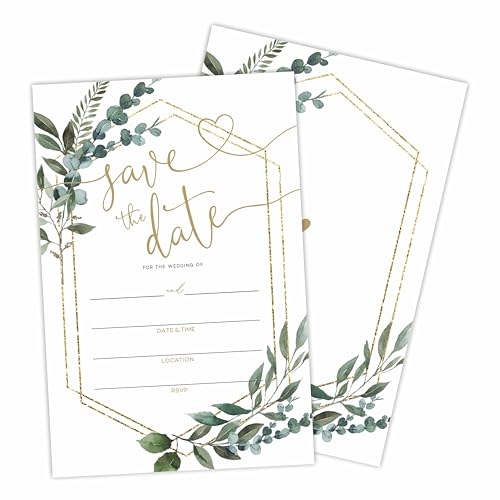
Save the Date Cards for Wedding: The Ultimate Guide
"Give your guests the gift of time. Learn how to design, word, and send save the date cards that set the tone for your celebration."
Your engagement is official, the ring is on, and the congratulations are pouring in. Now comes one of the first—and most important—pieces of wedding stationery: the save the date card. Unlike the formal invitation that follows months later, a save the date is a friendly, early heads-up that tells your guests to mark their calendars, book travel, and request time off work. It is the first glimpse your guests will get of your wedding's style, so it sets the tone for everything that follows.
In this guide, we will walk you through everything you need to know about save the date cards for weddings—from the ideal timing and wording to design styles and common pitfalls. Whether you are planning a destination celebration or a cozy local affair, this guide will help you get it right.
What Are Save the Date Cards?
The Short Version: A save the date card is an early announcement that tells your guests the date (and usually the location) of your wedding. It is not an invitation and does not require an RSVP. Think of it as a "hold the date" notice that gives guests time to plan.
Save the date cards are typically sent before the formal wedding invitations, often by several months. They are especially important if you are planning a wedding during a peak season, on a holiday weekend, or in a destination that requires travel. The card itself can be as simple as a postcard or as elaborate as a magnetic keepsake—there are no strict rules, only the expectation that it clearly communicates the date and location.
One of the most common questions couples ask is whether they need save the dates at all. The answer depends on your guest list and your wedding logistics. If your wedding is local and you are sending invitations well in advance, you might skip them. But if you have guests traveling from out of town, or if your date falls during a busy time, save the dates are a thoughtful and practical courtesy. For more on stationery etiquette, see our guide to wedding invitation wording.
When to Send: Timing Is Everything
The general rule of thumb is to send save the date cards six to eight months before your wedding date. This gives guests ample time to plan, especially if they need to arrange travel or time off work. However, there are several scenarios where you should send them earlier:
- Destination weddings: Send save the dates eight to twelve months in advance. Guests will need to book flights, accommodations, and possibly passports, so the more notice, the better. For tips on planning a destination wedding, see our destination wedding etiquette guide.
- Holiday weekends: If your wedding falls on or near a major holiday, send save the dates as early as possible—at least nine months ahead. Guests often have competing commitments and need extra time to plan.
- Peak wedding season: If you are marrying in a popular month like June or September, sending save the dates eight months out helps your guests prioritize your event over others.
- Short engagements: If your engagement is short (under six months), send save the dates as soon as your date and venue are confirmed—even if it is only a few months before the wedding. Something is better than nothing.
💡 Pro Tip: Never send a save the date before you have a confirmed date and venue. Changing the date later causes confusion and can make you look disorganized. Lock in your venue first, then order your cards.
If you are unsure about the timing of your other stationery, our wedding planning checklist can help you map out every step.
Wording That Works: Examples & Etiquette
The wording on your save the date card should be clear, concise, and reflective of your wedding's tone. You do not need to include every detail—save the full details for the invitation. At a minimum, include:
- Both of your names (or the names of the hosts, if someone else is hosting)
- The wedding date (including the day of the week)
- The city and state (or country) of the wedding
- A note that a formal invitation will follow
- A link to your wedding website, if you have one (this is optional but helpful)
Formal Wording Example
"Please save the date for the wedding of
Alexandra Marie Thompson
and
James Robert Mitchell
Saturday, the fourteenth of June
Napa Valley, California
Formal invitation to follow"
Casual Wording Example
"Mark your calendars!
Alex & Jamie
are tying the knot
June 14th
Napa Valley, CA
Invitation to follow"
If you are planning a destination wedding, you might also include a note about travel or accommodations. For more on destination wedding etiquette, see our guide to destination wedding etiquette. And if you are wondering whether to invite children or plus-ones, our articles on children at weddings and plus-one etiquette can help you navigate those decisions before you finalize your guest list.
Design Ideas & Card Styles
Save the date cards come in a variety of styles, from classic and formal to modern and playful. The design should align with your wedding's overall aesthetic—if you are planning a rustic wedding, for example, a kraft paper card with twine detailing would be perfect. For a black-tie affair, a minimalist card with gold foil lettering is more appropriate.
Magnetic Save the Dates
These are practical and popular—guests can stick them right on the refrigerator. They are a mid-range option and work well for couples who want their date to stay top-of-mind. They are especially useful for long engagements or destination weddings.
Postcard Save the Dates
Budget-friendly and eco-conscious, postcards are a simple and effective choice. They can be designed in minutes using online templates and printed at a local shop or through an online printer. They are ideal for casual or semi-formal weddings.
Foil-Stamped or Letterpress Cards
For a premium, luxury feel, foil-stamped or letterpress cards add texture and elegance. These are a top-tier option and pair beautifully with formal or black-tie weddings. They are often paired with matching envelopes and liner.
Digital Save the Dates
Eco-friendly and budget-friendly, digital save the dates are sent via email or social media. They are perfect for casual weddings or for couples who want to save on printing costs. You can use a save the date template to create a polished design.
If you are crafty and want to add a personal touch, you can also make your own save the dates using a save the date template. Just be sure to order a proof before printing a large batch—colors and text alignment can vary between screens and printers.
Digital vs. Printed Cards
Both digital and printed save the dates have their advantages. Printed cards feel more formal and are a lovely keepsake for guests, especially older relatives. Digital cards are faster, more affordable, and more flexible—you can update them easily if plans change. If you are having a destination wedding, a digital save the date with a link to your wedding website is a great way to share travel information early.
One hybrid approach is to send printed save the dates to older guests and digital ones to younger friends and family. This way, you can be both respectful of tradition and mindful of your budget.
💡 Budget-Friendly Tip: If you are ordering printed cards, consider ordering them in bulk with your wedding invitations to save on shipping. Many stationery companies offer discounts for bundled orders.
Common Mistakes to Avoid
Even the most organized couples can stumble when it comes to save the dates. Here are a few common mistakes to avoid:
- Sending too early or too late: Sending save the dates a year in advance can confuse guests who may not yet know their schedules. Sending them too late defeats the purpose. Stick to the six-to-eight-month rule unless you have a specific reason to deviate.
- Forgetting to include the city and state: Even if you think everyone knows where you live, include the location. Guests may be traveling from out of town and need to know whether to book flights or hotels. For destination weddings, include the country if it is outside the US.
- Inviting guests you cannot accommodate: Once someone receives a save the date, they are on the guest list. Do not send them to "maybe" guests or coworkers you are not sure about. It is better to under-invite than to over-invite and have to rescind an invitation.
- Using the wrong names: Double-check the spelling of your names and your partner's name. Also, make sure you are using the names you plan to use on your wedding invitations (e.g., full legal names vs. nicknames).
- Forgetting to mention "invitation to follow": This is a small but important detail. It tells guests that this is not the actual invitation and that they should expect more information later.
If you are feeling overwhelmed by stationery decisions, remember that you do not have to do it all at once. Start with your save the dates, then move on to your invitations. For more guidance, our article on wedding invitation wording can help you tackle the next step.