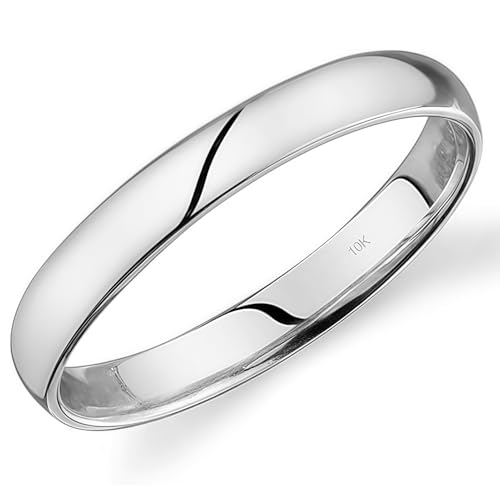
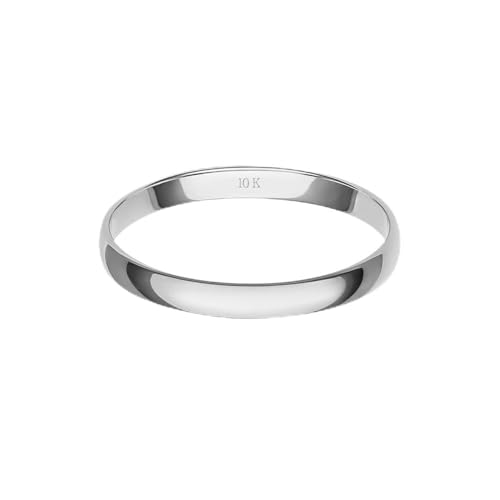
Gold vs. White Gold Wedding Bands: The Complete Guide
From karat weight to cost, durability to hypoallergenic options — everything you need to choose a wedding band you'll wear forever.
📖 What's inside this guide
Choosing your wedding bands is one of the most meaningful decisions you'll make. For many couples, the debate comes down to yellow gold vs. white gold. Both are classic, precious, and timeless — but they have different personalities, care requirements, and price points. Whether you're looking for a men's gold and white gold wedding band or a matching his and hers wedding bands set, this guide breaks down everything you need to know before you buy.
Yellow Gold vs. White Gold: What's the real difference?
Both metals start with pure gold (24k), but they are alloyed with different metals to achieve their distinct look and durability. Yellow gold is mixed with copper and zinc to retain its warm, traditional hue. White gold is alloyed with palladium, nickel, or silver and then plated with rhodium to create a bright, platinum-like finish. That rhodium plating is what gives white gold its mirror shine — but it also wears down over time, requiring replating every 12–18 months depending on wear habits.
Karat guide: 10k vs 14k vs 18k gold
Karat (K) indicates the purity of gold: 24k is pure gold but too soft for daily wear. Wedding bands are usually 14k or 18k. Here’s how to choose:
10k Gold
41.7% gold, durable & affordable. Best for active lifestyles. Tends to be slightly paler in yellow gold, and white gold may contain more nickel.
14k Gold (Most Recommended)
58.3% gold. Perfect balance of purity, durability, and color. Resists scratching and holds up to daily wear beautifully.
18k Gold
75% gold. Rich, deeper color (especially yellow gold). Softer, shows wear faster. Ideal for low-impact wearers.
How much should you budget for a gold wedding band?
Market prices fluctuate with gold spot prices, but typical retail ranges for high-quality solid gold bands (4mm–6mm width) are as follows: A simple 14k yellow gold comfort-fit band costs $350–$800. A comparable 14k white gold band runs slightly higher at $400–$900 due to the rhodium plating process. For diamond-accented or designer bands, expect $1,000–$2,500+. Keep in mind that wedding rings sold as sets (his & hers) often provide better value — typically $600–$1,500 for both rings in 14k gold.
Durability & everyday wear (scratch resistance)
Both yellow and white gold in 14k have similar hardness (about 3.5–4 on Mohs scale). However, white gold's rhodium plating is harder than gold itself — initially it resists scratches better. Once the plating wears, the underlying white gold (which has a faint yellowish cast) becomes visible and more prone to scratching. Yellow gold develops a beautiful patina over decades, which many couples love. If you work with your hands or lift weights, consider a men's gold wedding band with a brushed or matte finish — it hides daily wear better than high-polish.
Skin sensitivities: Which gold is hypoallergenic?
Nickel allergies are common, and most white gold alloys contain nickel. If you have sensitive skin, choose 14k or 18k white gold (less nickel), or opt for palladium white gold (nickel-free but 20–30% more expensive). Yellow gold is naturally hypoallergenic because it's alloyed with copper and zinc — rarely causing reactions. For extreme sensitivity, platinum is the premium solution. Always ask the jeweler for “nickel-free white gold” or request a palladium alloy.
His & Hers matching wedding bands: Style guide
Matching doesn't mean identical. Many couples choose a yellow gold band for her and a white gold band for him to blend both metals. Others prefer cohesive sets where both rings have the same finish and profile. The most popular matching combos are: both in 14k yellow gold, both in 14k white gold, or “duo-tone” sets where the outer band is yellow gold with a white gold inner liner. For a modern twist, try a white gold wedding ring for him paired with a diamond-accented white gold band for her — the symmetry feels intentional but not overly matchy.
✅ Why choose yellow gold
- No replating ever
- Traditional, vintage, warm look
- Hypoallergenic (14k & 18k)
- Hides minor scratches well
✅ Why choose white gold
- Modern, cool, platinum-like appearance
- Makes diamonds appear brighter
- Very hard initial surface (rhodium)
- Complements any skin tone
⚠️ Things to consider
- White gold requires replating ($60–$120 every 1–2 years)
- Yellow gold can show wear faster if high-polish
- Both are excellent heirloom metals
Frequently asked questions: gold wedding bands
Ultimately, the right wedding band is one that feels comfortable, matches your lifestyle, and makes you smile every time you glance at your hand. If you’re still debating between gold and white gold, consider ordering a cheap "try-on" set in both metals (many online jewelers offer this for $10–$30). And remember: buying your wedding bands should be joyful, not stressful. Use the curated selection below — all from trusted retailers — to kickstart your search.