Wedding Bands for Women: Your Guide to the Perfect Symbol
"A symbol of forever. Discover the styles, metals, and details that make a wedding band truly yours."
The wedding band is more than just a piece of jewelry; it is a daily, tangible symbol of your commitment and love story. Unlike the engagement ring, which is often chosen as a surprise, the wedding band is typically selected together, allowing you to find a ring that perfectly reflects your shared style and individual taste. For many women, it is the piece of jewelry they will wear most consistently for the rest of their lives, making the choice an important one.
While the options can seem overwhelming, from classic plain bands to sparkling diamond eternity rings, understanding the fundamentals of metal types, styles, and fit will guide you toward a decision you'll cherish forever. This comprehensive guide is designed to walk you through every consideration for wedding bands for women, ensuring you find a ring as enduring and beautiful as your love.
Your Wedding Band Buying Guide
Before you start browsing, it's helpful to establish a framework for your search. A wedding band is an investment in a piece you will wear every day, so it needs to be both beautiful and practical. Think about your lifestyle—do you work with your hands? Do you prefer minimalist jewelry or do you love a bit of sparkle? Answering these questions will help you narrow down the vast selection. The goal is to find a band that feels like a natural extension of you, one that you'll love looking at for decades to come. You can explore a wide variety of wedding band styles to start forming your preferences.
Popular Styles for Women's Wedding Bands
The style of your band sets the tone. It can be a seamless match to your engagement ring or a distinct piece that stands on its own.
The Classic Plain Band
Timeless and elegant, a simple band is the most popular choice. Its clean lines make it perfect for daily wear and it pairs effortlessly with any engagement ring. Its beauty lies in its simplicity, but don't mistake that for boring—a well-crafted plain band in a premium metal has a substantial, luxurious feel. It is the definition of understated elegance.
The Diamond Band
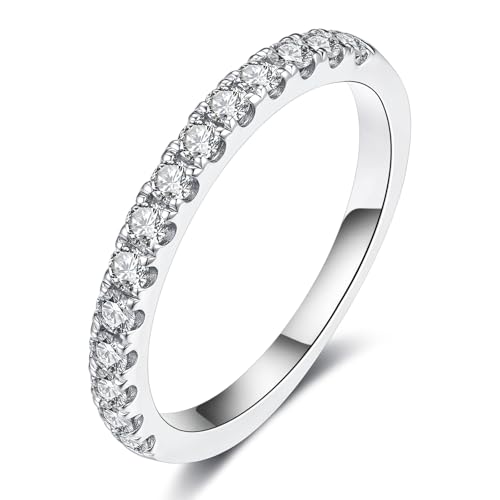
For those who love a touch of glamour, a diamond band adds a layer of brilliance. You can choose a half-eternity band (diamonds on the top half), which is easier to resize, or a full-eternity band for maximum sparkle. These are often chosen as anniversary gifts but have become increasingly popular as wedding bands, offering a beautiful contrast to a solitaire engagement ring.
The Contour or Curved Band
Designed to fit perfectly around a prominent center stone, a contour band is a practical and stylish choice. Its curve allows it to sit flush against a variety of solitaire engagement bands and other ring styles. This creates a cohesive, integrated look and prevents the two rings from rubbing against each other.
The Stackable Band
This trend involves wearing multiple thin bands on the same finger. It offers incredible flexibility—you can start with one or two bands as your wedding ring and add more for anniversaries or milestones. Stackable rings are perfect for creating a unique, personalized look and are often chosen in mixed metals or textures. You can explore our guide to stackable wedding rings for more inspiration.
A Guide to Wedding Band Metals
The metal you choose dictates the ring's color, durability, and maintenance requirements. This is one of the most important decisions in your search. Your choice should consider both your personal style and your daily lifestyle.
Gold: The Classic Choice
Gold is the traditional and most popular metal for wedding rings. It is available in yellow, white, and rose gold, offering a warm, classic look. 14k gold is a great balance of durability and purity, while 18k gold has a richer color but is slightly softer. A simple gold wedding band is an enduring symbol of tradition.
Platinum: The Premium Metal
Platinum is a naturally white, dense, and highly durable metal. It is often chosen for high-end rings and is prized for its weight and hypoallergenic properties. Unlike white gold, which is rhodium-plated, platinum will naturally develop a patina over time but can be polished back to a bright shine. It is a top-tier choice for a lifetime of wear.
Alternative Metals: Modern and Practical
For those seeking a modern look or maximum durability, alternative metals are excellent choices. Metals like titanium and tungsten are incredibly hard and scratch-resistant, making them ideal for an active lifestyle. They have a more contemporary, industrial feel and are very budget-friendly. You can learn more about the pros and cons of these metals in our titanium rings and tungsten rings guides. For a more affordable classic, sterling silver is a softer but beautiful option that requires more care.
Consider Your Engagement Ring: While matching your engagement and wedding band metals is traditional, mixing them (e.g., a white gold engagement ring with a yellow gold band) is a stylish modern trend. The most important thing is that you love the combined look and that the metals won't damage each other (platinum is harder than gold and can wear it down over time).
Stone Settings and Profiles
If you choose a band with stones, the setting style is just as important as the stones themselves. A wedding band with a diamond can be set in several ways:
- Prong Setting: The most classic setting, where metal claws hold the stone high, maximizing light and brilliance.
- Bezel Setting: A modern setting where a rim of metal completely encircles the stone. It is very secure and practical for an active lifestyle.
- Channel Setting: Diamonds are set between two parallel walls of metal. This creates a sleek, smooth line of sparkle and is very secure.
- Pavé Setting: A delicate setting where many small diamonds are set close together to create a continuous surface of sparkle.
The Importance of Comfort Fit
A detail you might not think of, but will feel every day, is the fit of the ring's interior. A "comfort fit" band has a rounded inner surface, while a "standard fit" has a flat interior. The rounded interior allows the ring to slide over the knuckle more easily and feels much more comfortable on the finger, especially for wider bands. It is a feature worth prioritizing for a ring you'll wear constantly.
How to Choose the Right Band
To make your final decision, consider these practical steps:
- Know Your Ring Size: Your finger size can change, so get sized by a professional jeweler. Remember, wider bands often require a slightly larger size for comfort.
- Try It On (If Possible): The way a ring looks online can differ from how it feels and looks on your hand. Visit a store to try on different widths and styles.
- Think About the Pairing: Bring your engagement ring with you when trying on bands to see how they sit together. The goal is a harmonious, comfortable fit.
- Consider the Future: If you plan to add an anniversary band later, a stackable or contour style now can be a great foundation.