Save the Date for a Destination Wedding: The Complete Guide
Give your guests the gift of time. Learn how to design, word, and time the perfect save the date for a destination celebration.
A destination wedding asks more of your guests than a local celebration. They need to book flights, reserve accommodations, request time off work, and budget for travel—often months in advance. That is exactly why the save the date for a destination wedding is one of the most important pieces of stationery you will send. Done right, it sets expectations, reduces last-minute stress, and gives your loved ones the runway they need to say yes with confidence.
Unlike a standard save the date, a destination version must communicate place, date range, and logistics hints all at once—without overwhelming the reader. In this guide, we will walk through the timing, wording, design, and etiquette that make a destination save the date truly effective, so you can move straight into planning with clarity.
Why Save the Dates Matter More for Destination Weddings
For a local wedding, a save the date is a courtesy. For a destination wedding, it is a practical necessity. Guests cannot commit to international travel on a few months' notice without paying a premium on airfare or settling for less desirable accommodations. An early, well-crafted save the date gives them the information they need to research flights, compare hotels, and plan around school schedules or work commitments.
It also shapes your guest list early. When people know the destination and approximate timeframe, they can self-select—those who cannot travel will let you know gently, and those who are excited can start planning immediately. This transparency helps you budget for catering and seating long before the formal wedding invitations go out. If you are still deciding on a location, our guide to the best places to get married just the two of you is a helpful starting point before you commit to a destination.
Key distinction: A save the date is not an invitation. It does not require an RSVP, and it should not include registry details. Its sole job is to announce the date and destination so guests can begin planning.
Perfect Timing: When to Send Yours
Timing is the single biggest factor in whether your destination save the date does its job. Send it too late, and guests will feel rushed; send it too early, and it may get lost among holiday cards or everyday mail. The sweet spot depends on how far your guests will travel.
8 to 12 Months Before
The standard window for destination weddings. This gives guests ample time to budget for flights, request leave, and arrange childcare. For international or remote locations, aim for the full 12 months.
Peak Season & Holidays
If your wedding falls during a popular travel period or holiday weekend, send your save the date closer to the 12-month mark. Accommodations book up fast in peak season.
Domestic but Far
For a destination within the same country but requiring air travel, 8 to 10 months is generally sufficient. Still, earlier is safer if your guest list spans multiple regions.
Follow-Up Invitations
Formal invitations should follow 3 to 4 months before the wedding, with RSVPs due 6 to 8 weeks out so you can finalize catering and seating.
💡 Pro tip: Pair your save the date with a wedding website launch. Guests who receive the card can immediately visit the site for travel tips, hotel blocks, and flight recommendations—turning early notice into early action.
What to Include on Your Save the Date
A destination save the date has to answer the essential questions without becoming a full itinerary. Keep it clean and scannable. Include the following core elements:
- Your names as the couple, presented prominently.
- The wedding date or date range—for multi-day celebrations, a range is more accurate.
- The destination—city and country, with a note that the specific venue will follow.
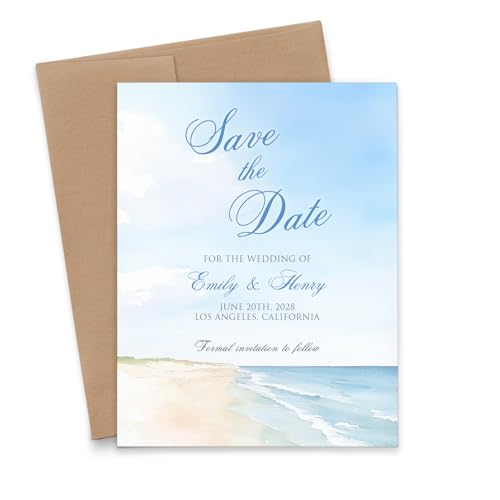
- A "formal invitation to follow" line so guests understand this is not the final word.
- Your wedding website URL for travel, lodging, and RSVP details.
- Optional: a travel hint such as "nearest airport" or "blocked hotel details coming soon."
What you should leave off: registry information, dress code, full schedules, and RSVP requests. Those belong on the formal invitation or your wedding website. If you are also finalizing other stationery, our guide to save the date cards for wedding offers complementary design guidance.
Wording Ideas and Examples
The tone of your wording should match the style of your celebration—formal, playful, or minimalist. Below are three approaches you can adapt, each of which clearly communicates the destination and date without overloading the card.
Formal & Classic
"Please save the date for the wedding of [Name] and [Name] as they celebrate in [City, Country] on [Date]. Formal invitation to follow."
Best for black-tie or traditional celebrations. Keep typography serif, elegant, and restrained.
Playful & Travel-Themed
"Pack your bags—[Name] and [Name] are getting married in [Destination]! Save the date for [Date]. More details to come on our wedding website."
Ideal for beach, tropical, or relaxed celebrations. Pair with passport or boarding-pass motifs.
Modern & Minimalist
"[Name] & [Name] / [Date] / [City, Country] / Invitation to follow."
A clean layout with generous whitespace suits modern minimalist weddings. Let the typography do the work.
Wording checklist:
• Names clearly visible
• Date or date range
• City and country
• "Invitation to follow"
• Wedding website URL
Design Ideas for Travel-Themed Cards
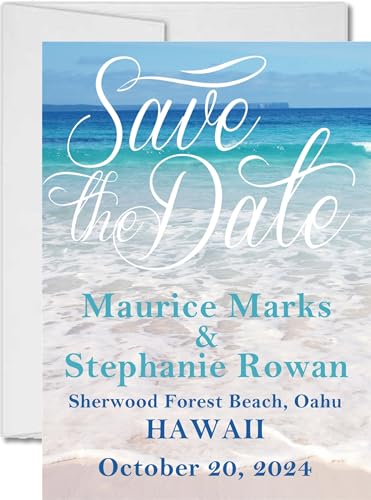
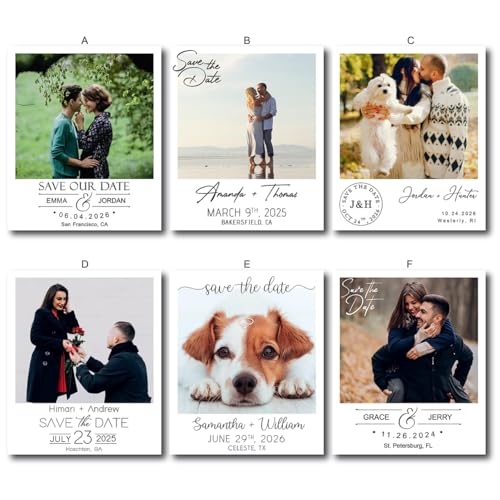
The design of your save the date should hint at the destination without becoming a cliché. A few tasteful motifs can transport guests before they even book a flight:
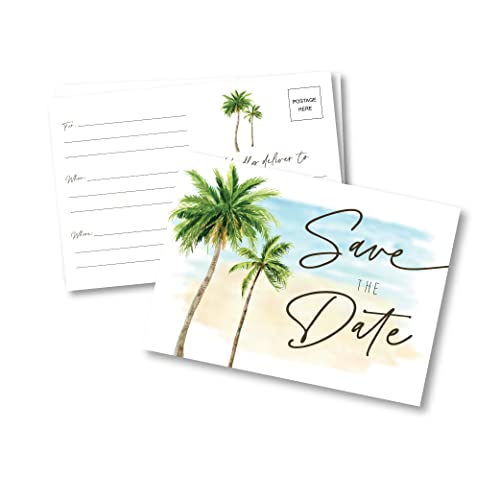
- Vintage postcard styling with a stamp and cancellation mark for a nostalgic, romantic feel.
- Boarding-pass or ticket layouts that playfully frame the destination and date as a journey.
- Watercolor illustrations of the landscape, skyline, or coastline for a soft, artistic touch.
- Custom maps showing the destination with a subtle heart or pin marker.
- Minimal typography with a single destination line and a refined color palette.
Whatever motif you choose, keep the text legible and the layout uncluttered. Guests should grasp the date and place within seconds. If you plan to design your own stationery, our guide to DIY wedding projects can help you source templates and print affordably.
Etiquette Rules Every Couple Should Know
Destination weddings carry their own etiquette considerations, and the save the date is often the first impression of your planning style. Keep these rules in mind:
Send to everyone on your guest list. Even guests you suspect cannot travel should receive a save the date. Excluding them quietly can cause hurt feelings; letting them decide preserves goodwill.
- Do not include registry details. It is considered gauche to mention gifts before the invitation arrives.
- Do not request an RSVP. Save the dates are informational; formal RSVPs come with the invitation.
- Be clear about plus-ones. If you can, address the envelope to "and Guest" only when a plus-one is intended, so expectations are set early.
- Respect budget sensitivities. Avoid language that implies guests are expected to spend a certain amount. Frame travel as an invitation, not an obligation.
- Keep the guest list consistent. Anyone who receives a save the date should also receive an invitation.
For a deeper dive into the social nuances of destination celebrations, our guide to destination wedding etiquette covers guest obligations, gift expectations, and communication timing in detail.
Destination Wedding Save the Date FAQs
Once your save the date is out, the real fun begins—securing a venue, blocking hotel rooms, and shaping the celebration itself. If you are still exploring locations, our guide to outdoor places to have a wedding and our curated wedding venues directory can help you narrow the field. With early notice and clear communication, your guests will arrive relaxed, prepared, and ready to celebrate with you.