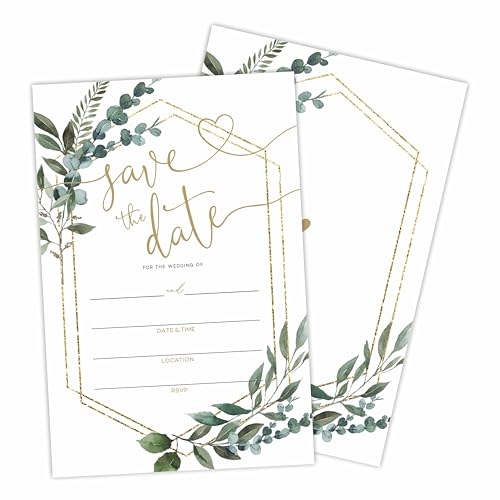
Save the Date Wedding Invitation Cards: Your First Impression
"Set the tone for your celebration with a card that tells guests to mark their calendars—and gives them a glimpse of the beautiful day to come."
A save the date wedding invitation card is often the very first piece of stationery your guests will receive. It arrives months before the formal invitation, acting as a friendly heads-up that your wedding date is set and that a celebration is on the horizon. While it may seem like a simple formality, this small card carries significant weight: it sets the tone for your entire event, helps guests plan their schedules, and builds anticipation for the big day.
Whether you are planning an intimate garden ceremony or a grand ballroom reception, choosing the right save the date card is an important step in your wedding planning checklist. This guide walks you through everything you need to know—from selecting a design and crafting the perfect wording to understanding proper etiquette and timing—so you can make an informed, confident decision.
What Is a Save the Date Card?
A save the date card is a pre-invitation notice sent to your guests to inform them of your wedding date and location well before the formal invitation arrives. Unlike the invitation, which includes full details such as RSVP instructions, menu choices, and directions, the save the date is deliberately brief. Its primary purpose is to give guests enough notice to arrange time off work, book travel, and set aside the date.
Save the dates are typically sent six to eight months before the wedding, though the exact timing depends on factors like whether your event is a destination wedding or falls on a holiday weekend. They can be printed on premium cardstock, designed as magnets, or delivered digitally via email. Regardless of format, a well-designed save the date card serves as a stylish preview of the aesthetic and mood you are planning for your ceremony and reception.
Did You Know? Save the date cards are a relatively modern addition to wedding stationery. They became popular in the late 20th century as weddings grew larger and guests increasingly had to travel longer distances. Today, they are considered an essential part of the wedding planning timeline for most couples.
Why It Matters for Your Wedding
Sending a save the date card is more than just a courtesy—it is a strategic part of your wedding planning. Here is why it matters:
- Guarantees Better Attendance: When guests receive ample notice, they are far more likely to prioritize your wedding. This is especially important for out-of-town guests or those with busy schedules.
- Reduces Last-Minute Stress: By informing guests early, you minimize the risk of conflicts and last-minute cancellations. It also gives you a clearer picture of your guest count well before the RSVP deadline.
- Sets the Tone: The design of your save the date card—whether elegant and formal, playful and modern, or rustic and romantic—gives guests a preview of what to expect. It builds excitement and sets the aesthetic tone for your celebration.
- Helps with Budgeting: Knowing early who can attend helps you make more accurate decisions about venue size, catering, and seating arrangements. This is particularly useful if you are planning a small wedding or a budget-conscious celebration.
- Creates a Cohesive Stationery Suite: Save the dates, invitations, and thank-you cards should feel like part of the same family. Starting with a well-designed save the date sets the stage for a beautiful, consistent stationery suite.
Timing: When to Send Your Save the Dates
The timing of your save the date mailing depends on several factors, including the size of your wedding, the location, and the season. Here is a general guideline:
Standard Weddings
Send save the dates six to eight months before your wedding date. This gives guests enough time to plan without overwhelming them with details too far in advance. For a local wedding with mostly in-town guests, six months is usually sufficient.
Destination Weddings
For a destination wedding, send save the dates eight to twelve months in advance. Guests will need time to book flights, secure accommodations, and arrange passports or visas. The earlier, the better for international travel.
Holiday Weekends
If your wedding falls on or near a holiday weekend (such as Memorial Day, Labor Day, or New Year's Eve), send save the dates nine to twelve months ahead. Holiday weekends are popular for travel, and guests appreciate extra notice to plan accordingly.
Peak Wedding Season
For weddings during peak season (typically late spring through early fall), aim for eight months notice. Venues and vendors book up quickly, and your guests may have multiple weddings to attend, so early notice helps them prioritize.
Pro Tip: Always send save the dates after you have secured your venue and set a firm date. Sending a save the date before these details are confirmed can lead to confusion and last-minute changes that frustrate your guests. For more guidance on locking in your venue, see our guide on how to choose a wedding venue.
Essential Information to Include
A save the date card should be concise and clear. While it does not need to include every detail of your wedding, it must contain the core information that guests need to mark their calendars. Here is what to include:
Must-Have Information:
1. Your Names: Include the full names of both partners. If you are using a couple's monogram or a shared last name, make sure it is clear who is getting married.
2. The Wedding Date: Write out the full date—day of the week, month, day, and year. For example: "Saturday, the Fifteenth of September, Two Thousand Twenty-Six." This removes any ambiguity.
3. The Location: Include the city and state (and country, if applicable) where the wedding will take place. You do not need to list the specific venue unless you have already booked it and want to share.
4. A Note to Expect a Formal Invitation: Add a line such as "Formal invitation to follow" to let guests know that more details are coming.
5. Your Wedding Website (Optional but Recommended): If you have a wedding website, include the URL. This is a helpful way to share additional information without cluttering the card. See our guide on how to build a wedding website.
What NOT to Include: Save the date cards should never include registry information, RSVP instructions, or detailed menu options. Those details belong on the formal invitation or your wedding website. Including them on a save the date is considered a breach of wedding etiquette and can confuse guests about when to take action.
Popular Card Styles & Designs
The style of your save the date card should reflect the tone and theme of your wedding. Here are the most popular styles to consider:
- Classic & Elegant: Clean typography, neutral colors, and subtle borders. Often features a monogram or a delicate botanical motif. Perfect for black-tie weddings or formal ballroom receptions. Pair with a matching wedding invitation wording for a cohesive suite.
- Modern & Minimalist: Bold, sans-serif fonts, lots of white space, and geometric shapes. Ideal for modern minimalist weddings or city celebrations. A clean, understated design that lets the date and names take center stage.
- Rustic & Natural: Kraft paper, wood-grain textures, and earthy color palettes. Often adorned with wildflowers or greenery. A perfect fit for rustic wedding decor or barn venues.
- Romantic & Whimsical: Soft watercolor washes, floral illustrations, and flowing script fonts. Ideal for garden weddings, boho celebrations, or any event with a romantic, dreamy aesthetic.
- Photo Save the Dates: Featuring an engagement photo or a candid shot of the couple. These are personal and warm, and they give guests a glimpse of your happiness. Choose a high-quality photo that reflects your style.
- Magnet Save the Dates: A practical and popular choice—guests can stick them on the fridge as a constant reminder. Magnets are especially useful for long engagements or destination weddings.
Wording Ideas & Etiquette
The wording on your save the date card should be warm, clear, and reflective of your personality as a couple. Here are some examples to inspire you:
Formal & Traditional
"Please save the date for the wedding of [Partner A] and [Partner B]. Saturday, the Fifteenth of September, Two Thousand Twenty-Six. City, State. Formal invitation to follow."
Casual & Playful
"We're getting married! Mark your calendars for [Date]. Join us in [City, State] for a celebration of love, laughter, and happily ever after. Invitation to follow."
Destination Wedding
"Pack your bags—we're getting married in [City, Country]! Save the date for [Date]. More details and formal invitation to follow. Visit our wedding website for travel information."
Minimalist
"[Partner A] & [Partner B]. [Date]. [City, State]. Save the date. Formal invitation to follow."
Etiquette Tips: Always include the full names of both partners. If you are including a wedding website, make sure it is live and up-to-date before sending the cards. Avoid using abbreviations for the date or location. And remember: the save the date is not the place for registry information—keep it simple and celebratory. For more guidance on invitation etiquette, see our wedding invitation wording guide.
Digital vs. Printed Save the Dates
When it comes to format, you have two main options: digital or printed. Each has its own advantages, and the right choice depends on your wedding style, budget, and guest list.
Digital Save the Dates: Sent via email, social media, or a wedding website. They are eco-friendly, cost-effective, and can include interactive elements like RSVP links, maps, and countdown timers. They are ideal for destination weddings or couples with guests spread across the globe. However, they can feel less personal than a physical card.
Printed Save the Dates: A tangible card delivered by mail. They feel more formal and personal, and they can be beautifully designed with premium materials like textured cardstock, foil stamping, or letterpress. They are a wonderful keepsake for guests and are often preferred for traditional or luxury weddings. If you choose printed cards, consider ordering a few extra for your photographer and for your own memory box.
Many couples choose a hybrid approach: sending printed cards to close family and friends while using digital save the dates for the broader guest list. This allows you to balance personalization with practicality. If you are looking for inspiration, explore our collection of save the date cards and wedding save the dates.
Common Mistakes to Avoid
Even the most well-intentioned couples can make a few missteps when sending save the dates. Here are the most common mistakes to avoid:
- Sending Too Early or Too Late: Sending save the dates more than a year in advance can confuse guests, while sending them too late defeats their purpose. Stick to the six-to-eight-month guideline for local weddings and eight-to-twelve months for destination events.
- Including Too Much Information: The save the date is not the invitation. Keep it simple—names, date, location, and a note that a formal invitation will follow.
- Forgetting the Wedding Website: If you have a wedding website, include it on the save the date. It is the easiest way to share additional details without cluttering the card.
- Ignoring Etiquette: Do not include registry information, RSVP instructions, or dress code details on the save the date. Those belong on the formal invitation or your website.
- Not Proofreading: Always double-check names, dates, and locations. A misspelled name or incorrect date can cause confusion and embarrassment. Ask a trusted friend or family member to proofread before you send.
One More Tip: If you are planning a small wedding or an intimate elopement, you may not need save the date cards at all. For very small guest lists, a phone call or a personal email can be just as effective—and far more personal.