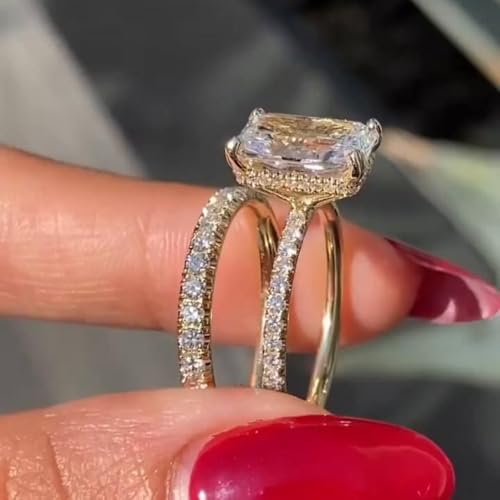
Emerald Cut Wedding Rings: A Guide to Timeless Elegance
"Discover why the step-cut silhouette of an emerald ring has become the ultimate symbol of sophisticated, modern love."
The emerald cut is not just a diamond shape; it is a statement of taste. Unlike the brilliant sparkle of a round cut, the emerald cut offers a "hall of mirrors" effect—a sleek, architectural elegance that has captured the hearts of brides for nearly a century. From the Art Deco era to modern red carpets, the emerald cut wedding ring remains a hallmark of sophisticated luxury.
If you are researching emerald cut wedding rings, you have likely realized that this cut is unlike any other. It requires a specific eye for detail, particularly when it comes to clarity and setting style. In this guide, we will walk you through everything you need to know to select a ring that will look stunning for a lifetime.
Why Choose an Emerald Cut?
The emerald cut is a "step cut," meaning its facets are rectangular and parallel, like a staircase. This structure creates a unique optical illusion. Instead of the fiery, scattered light of a brilliant cut, an emerald cut reflects light in broad, dramatic flashes. It is a look of quiet confidence and refined glamour.
Celebrities like Beyoncé and Amal Clooney have popularized the cut in recent years, but its roots run deep. Originally designed for emeralds (hence the name) to protect the fragile corners of the stone, the cut was adapted for diamonds in the 1920s. It is the quintessential choice for the bride who prefers modern elegance over traditional sparkle.
💡 The "Hall of Mirrors" Effect: Because emerald cuts have fewer facets than round brilliants, they create a mesmerizing, mirrored reflection. This makes them perfect for couples who appreciate clean lines and minimalist aesthetics.
The Clarity Rule: What to Look For
If you are shopping for an emerald diamond engagement ring or a wedding band, you must understand one critical rule: Clarity is king.
Because the emerald cut has a large, open table (the flat top surface), any internal inclusions or blemishes are immediately visible to the naked eye. A round brilliant cut can hide flaws under its facets; an emerald cut cannot. When selecting your stone, aim for a clarity grade of VS1 or higher. This ensures the stone looks perfectly clean and allows the "hall of mirrors" effect to shine through.
Color Tip: While you can go slightly lower on color (like a G or H grade) because the step cuts don't trap color as much as brilliant cuts, clarity is non-negotiable. Always view the stone in person or ask for high-resolution video under different lighting conditions.
Choosing the Perfect Setting
The setting you choose can dramatically alter the look of your emerald cut ring. Because the shape is already elongated, the setting should enhance—not overpower—the stone.
- The Classic Solitaire: A simple four-prong setting is the most popular choice. It allows maximum light to enter the stone and keeps the focus entirely on the center diamond. This is the purest way to showcase an emerald cut wedding ring.
- Three-Stone Settings: Pairing your emerald cut center with trapezoid or half-moon side stones creates a regal, Art Deco look. This adds width to the ring, making it a bold statement piece.
- Bezel Settings: A thin metal rim encircles the stone, protecting the fragile corners. This is ideal for active brides or those who want a sleek, modern look. Bezel settings are also a great choice for an emerald wedding ring that will be worn daily.
- Pavé Bands: A band encrusted with tiny diamonds adds sparkle without distracting from the center stone. This is a beautiful way to bridge the gap between the center stone and a matching emerald cut diamond band.
Metal Matters: Gold vs. Platinum
Your metal choice will affect the color perception of the diamond and the overall style of the ring.
Platinum and White Gold are the most popular choices for emerald cut rings. The cool, white tones complement the icy clarity of the diamond and create a seamless, modern look. They also provide a durable, secure setting for the stone's corners.
Yellow Gold and Rose Gold offer a vintage, romantic feel. A yellow gold setting can make a slightly warmer-toned diamond (like a J or K color) look more colorless, while rose gold creates a beautiful, soft contrast. If you are looking for a gold wedding ring set for women, an emerald cut in yellow gold is a stunning, timeless combination.
Stacking & Matching Bands
One of the joys of an emerald cut ring is building the perfect stack. Because the center stone is often rectangular, your wedding band can be straight, curved, or even a matching emerald cut band.
A popular trend is to pair a solitaire emerald engagement ring with a thin eternity band diamond ring. The continuous line of diamonds complements the step-cut facets without competing with them. Alternatively, a plain gold wedding band offers a classic, understated contrast.
For a truly cohesive look, consider a matching set. An emerald engagement band paired with a contoured wedding band creates a seamless, elegant silhouette that sits flush on the finger. If you are shopping for a partner, you might also explore our guide to engagement rings with matching wedding bands to see how other cuts compare.