Wedding Bands for Men and Women Set: A Complete Guide
Discover how to choose matching rings that reflect your style, budget, and commitment—without the guesswork.
Choosing wedding bands for men and women as a set is one of the most practical and meaningful decisions you can make during wedding planning. A coordinated set ensures that both rings share a design language—whether that's the same metal, a complementary finish, or a matching engraving—so your symbols of commitment feel connected. Beyond aesthetics, buying a set often simplifies sizing, styling, and shopping, letting you focus on the celebration ahead.
This guide walks you through the key factors: metal durability, style compatibility, comfort fit, and personalization. You'll learn how to balance tradition with modern preferences and avoid common pitfalls. By the end, you'll be ready to choose a set that feels right for both of you—and that you'll be proud to wear every day.
Why Choose a Matching Set?
Matching wedding band sets are popular for good reason. They create a visual harmony that photographs beautifully and serve as a daily reminder of your partnership. But "matching" doesn't mean identical. Many couples opt for complementary designs: a wide, brushed titanium band for him and a slender, diamond-etched white gold band for her. The connection comes from shared elements—like the same metal tone or a similar milgrain edge—rather than an exact replica.
Pro Tip: If you love the idea of a set but have different style preferences, look for "his and hers" collections that offer the same design motif in masculine and feminine profiles. Many jewelers now offer his and hers wedding ring sets that balance width, weight, and detailing for each partner.
Another advantage of buying a set is consistency in metal and finish. This matters for long-term wear: if one ring is 14k yellow gold and the other is white gold, they'll age differently. A set ensures both rings are made from the same alloy, so they wear at similar rates and can be polished together. For couples who want a truly unified look, a matching set is the simplest path.
Metal Options for Him & Her
The metal you choose affects durability, comfort, and appearance. Here's a breakdown of the most common options for wedding bands for men and women sets:
Gold (Yellow, White, Rose)
Classic and timeless. 14k gold offers a good balance of durability and value, while 18k is softer but richer in color. White gold is often rhodium-plated for a bright finish; rose gold adds a romantic warmth. Gold is easy to resize and repair, making it a safe long-term choice.
Tungsten Carbide
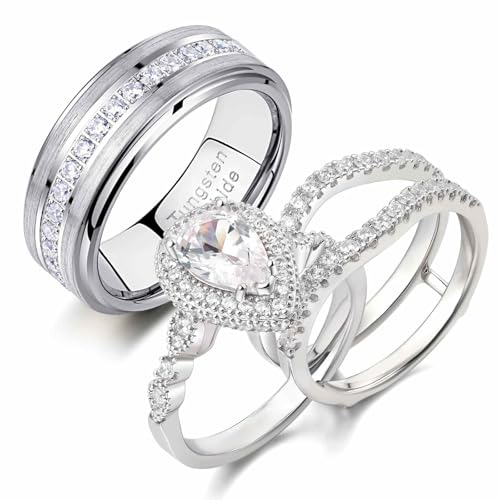
Extremely scratch-resistant and heavy, tungsten carbide is a top pick for men's bands. It cannot be resized, so accurate sizing is critical. Women's tungsten bands are available in thinner profiles, often with inlays or diamonds. Tungsten carbide wedding bands for him are a popular durable option.
Titanium
Lightweight, corrosion-proof, and hypoallergenic. Titanium is great for active couples. It has a darker, more matte gray tone than white gold. Like tungsten, it cannot be resized, so choose a comfort-fit design. Titanium rings offer a modern, industrial look.
Sterling Silver
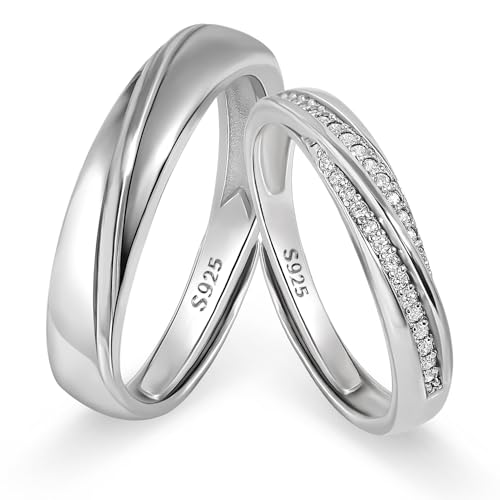
Affordable and versatile, sterling silver is softer than gold and requires more care to prevent tarnishing. It's a budget-friendly option for couples who want a classic look without the higher tier investment. Sterling silver wedding bands for him are available in many styles.
Stainless Steel
Durable, affordable, and resistant to rust. Stainless steel is a practical choice for men's bands, especially in industrial or outdoor lifestyles. It's not resizable, but it holds up well to daily wear. Stainless steel wedding bands for him are a solid entry-level option.
Platinum
A premium, dense metal that's naturally white and hypoallergenic. Platinum develops a patina over time but can be polished to a high shine. It's an excellent choice for couples who want a luxury, heirloom-quality set. Expect a higher investment tier.
When pairing metals, consider lifestyle. If one partner works with their hands, a harder metal like tungsten or titanium may be wise for them, while the other partner might prefer gold for its resizing flexibility. Many sets now mix metals—such as a gold band with a tungsten inlay—to satisfy both needs.
Style Pairings That Work
Style is where a set can feel truly personal. Here are several pairings that consistently work well:
Classic & Simple
A plain, rounded gold band for him and a slender gold band with a milgrain edge for her. This pairing is timeless, easy to wear, and suits any attire. It's a safe choice for couples who prefer understated elegance.
Modern & Textured
A brushed titanium band with a beveled edge for him, and a hammered or satin-finish white gold band for her. The shared texture—whether brushed or hammered—creates a subtle connection without being overly matched.
Diamond Accents
If she loves sparkle, consider a diamond-etched band for her and a channel-set diamond band for him. For a more subtle approach, a single diamond in a flush setting can add a touch of brilliance to a men's band without being flashy. Wedding bands with a diamond are increasingly popular for men.
Mixed Metals
A two-tone band for him (e.g., gold and titanium) paired with a white gold band for her. The shared gold tone ties them together, while the mixed-metal element adds visual interest. This is a great option if you want a set that feels modern and unique.
Style Tip: If you're unsure, bring photos of rings you both like to a jeweler. Seeing them side by side—or trying on sample bands—makes the decision much easier. Many jewelers offer sample sets or can order in different widths for a fitting.
Fit and Comfort Considerations
Comfort fit is a ring design where the inside of the band is slightly rounded, making it easier to slide on and off. It's especially important for wide bands (6mm and up), which can feel tight. For a matching set, ensure both rings use the same fit profile—or at least that each partner is comfortable with their own.
Sizing is critical, especially for metals that cannot be resized (tungsten, titanium, stainless steel). Get sized professionally at a jeweler, ideally at the end of the day when fingers are slightly larger. If you're buying online, order a ring sizer or visit a local store first. Remember that wider bands require a slightly larger size than narrow ones.
Size Check: Your ring size can change with temperature and time of day. Measure your finger at room temperature, and if you're between sizes, go with the larger one for comfort. For a set, it's often best to be sized in person so both partners can compare fit.
For active couples, consider a low-profile or domed band that won't catch on clothing. A beveled edge also adds durability. Women's bands with stones should have secure settings—bezel or flush settings are less likely to snag than prongs.
Personalization & Engraving
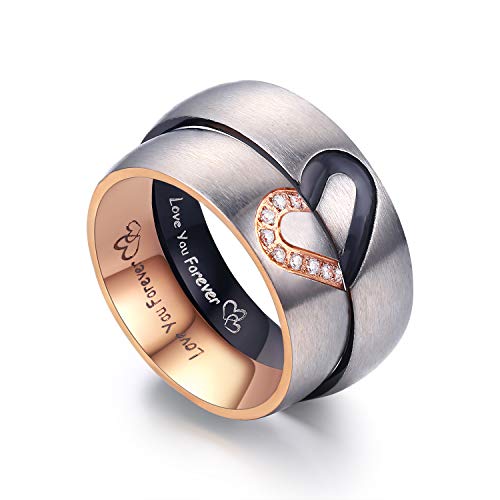
Engraving is a simple way to make a matching set feel deeply personal. You can choose the same inscription for both rings, or complementary phrases—like "Always" and "Forever," or your wedding date and initials. Common engraving options include:
- Names or initials
- Wedding date
- A short vow or phrase ("I do," "My person")
- Latitude/longitude of a meaningful place
- Fingerprint or handwriting (available from some jewelers)
Keep in mind that engraving adds time to the order—usually 1–2 weeks. For resizable metals like gold, engraving inside the band is straightforward. For tungsten or titanium, engraving may be limited to the outer surface or require laser engraving. Ask your jeweler about options before you buy.
Smart Buying Tips
Buying a set online can be convenient, but there are a few things to watch for. First, confirm the metal purity and finish. "Gold" should be labeled 14k or 18k; "tungsten" should specify tungsten carbide (not just tungsten). Second, check the return policy—especially for engraved rings, which are often final sale. Third, read reviews for sizing accuracy and comfort.
Buying Tip: If you're ordering online, use a printable ring sizer or get sized at a local jeweler first. Many online retailers offer free exchanges for sizing, but it's easier to get it right the first time. For matching sets, ensure both rings come from the same collection to guarantee consistent metal and finish.
Consider the warranty. Some metals, like tungsten, can crack under extreme pressure—so a warranty that covers replacement is valuable. For gold and platinum, ask about complimentary polishing and re-plating (for white gold). Finally, check shipping times: custom engravings and made-to-order sets can take several weeks, so plan ahead if your wedding date is close.
For a broader overview of ring styles, explore our guide to wedding band styles. And if you're still deciding between a single band or a set that includes an engagement ring, our article on wedding band and engagement ring sets can help clarify the options.