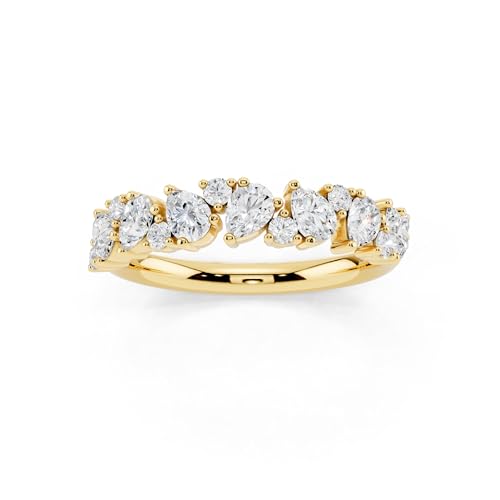
Pear Shaped Diamond Band: Elegance in Every Curve
"Discover the timeless allure of the teardrop silhouette—a ring that captures light, love, and individuality."
A pear shaped diamond band is more than just jewelry—it is a statement of sophistication. With its unique teardrop outline, the pear cut combines the brilliance of a round diamond with the elegance of a marquise. Whether you are searching for an engagement ring, a wedding band, or a right-hand ring, a pear shaped diamond band offers a distinctive silhouette that flatters every finger.
In this guide, we will walk you through everything you need to know: from understanding the cut's anatomy to choosing the perfect setting and metal. You will also learn how to care for your ring so it stays dazzling for decades. By the end, you will feel confident making a purchase that balances beauty, quality, and value.
Why Choose a Pear Shaped Diamond Band?
The pear cut, also known as the teardrop cut, has a rich history dating back to the 15th century. Its elongated shape creates a slimming effect on the finger, making it a favorite among those who want a ring that feels both romantic and modern. Unlike a classic round brilliant, a pear shaped diamond band offers a unique asymmetry that catches the eye and reflects light in a mesmerizing way.
Another advantage is versatility. A pear diamond can be worn with the point facing up (toward the fingertip) for a traditional look, or facing down (toward the knuckle) for a more contemporary feel. This flexibility means your ring can adapt to your personal style. If you are planning a modern minimalist wedding, a solitaire pear band makes a clean, elegant statement. For a more traditional celebration, a halo setting adds extra sparkle.
Did You Know? The pear cut is one of the few diamond shapes that is symmetrical along its vertical axis. This means it looks balanced from every angle, making it an excellent choice for photography—especially for golden hour photos or close-up ring shots.
Anatomy of the Pear Cut
To appreciate a pear shaped diamond band, it helps to understand its parts. The pear cut has three key features:
- The Round End: This is the widest part of the diamond, typically cut with brilliant facets to maximize light return. It is the "head" of the pear.
- The Pointed End: Also called the "tip," this end tapers to a sharp point. It is the most delicate part of the stone and requires a protective setting.
- The Belly: The curved sides connecting the round and pointed ends. The symmetry of the belly determines how balanced the diamond looks.
When shopping, pay attention to the length-to-width ratio. A classic pear has a ratio between 1.50 and 1.75. A lower ratio (closer to 1.50) gives a wider, chunkier look, while a higher ratio (above 1.75) creates a more elongated, slender appearance. The right ratio depends on your personal preference and finger length.
Popular Styles and Settings
A pear shaped diamond band can be designed in countless ways. Here are the most popular styles you will encounter:
Solitaire Pear Band
A single pear diamond set on a plain band. This is the purest expression of the cut, allowing the diamond to take center stage. Ideal for those who love understated elegance. Works beautifully with a platinum diamond wedding band for a cohesive look.
Halo Pear Band
A pear diamond surrounded by a border of smaller diamonds. The halo enhances the perceived size of the center stone and adds extra brilliance. Perfect for those who want maximum sparkle. Pairs well with oval diamond band engagement rings if you are stacking bands.
Three-Stone Pear Band
A pear diamond flanked by two smaller stones (often round or pear). This style symbolizes past, present, and future. It offers a balanced, symmetrical look that works well as an engagement ring or anniversary band.
Eternity Pear Band
Pear diamonds set continuously around the entire band. This is a luxurious choice for a wedding band or anniversary ring. Because the stones go all the way around, sizing can be tricky—work with a jeweler who specializes in eternity bands.
Beyond these, you can also find pear bands with bezel settings (which protect the pointed tip), channel settings, or pavé bands. The right choice depends on your lifestyle and how much maintenance you are comfortable with. If you lead an active life, a bezel or semi-bezel setting is a practical option.
Choosing the Right Metal
The metal you choose affects both the look and durability of your pear shaped diamond band. Here is a quick comparison of the most common options:
- Platinum: A dense, naturally white metal that is hypoallergenic and highly durable. It develops a patina over time but can be polished back to a high shine. A top-tier choice for heirloom-quality jewelry. See our guide to platinum engagement bands for more details.
- White Gold: An affordable alternative to platinum that offers a similar bright white look. It is usually rhodium-plated, which requires re-plating every few years. A mid-range option that is very popular.
- Yellow Gold: A classic, warm metal that complements the natural color of diamonds. It is softer than platinum but easy to maintain. Ideal for vintage-inspired designs.
- Rose Gold: A romantic, pinkish metal that has gained popularity in recent years. It flatters all skin tones and pairs beautifully with pear diamonds. Consider a white gold and yellow gold engagement ring if you want a two-tone effect.
For a cohesive look, many couples choose matching metals for their wedding ring sets his and hers. If you prefer a mixed-metal stack, ensure the hardness of the metals is similar to avoid wear.
How to Buy: A Smart Shopper's Checklist
Buying a pear shaped diamond band is an investment. Use this checklist to make a confident decision:
1. Understand the 4 Cs
Cut, color, clarity, and carat weight all matter, but for pear shapes, cut is king. A well-cut pear will have excellent symmetry and proportions, maximizing brilliance. Avoid stones with a "bow-tie" effect—a dark band across the center caused by poor cutting.
2. Check the Tip
The pointed end is the most vulnerable part. Inspect it under magnification to ensure there are no chips or cracks. A prong should cover the tip to protect it from impact.
3. Consider the Setting
As mentioned, bezel settings offer the best protection. Prong settings are more traditional but require more care. If you choose prongs, make sure they are rounded and smooth to avoid snagging.
4. Try It On
Pear shapes can look different on different hands. Visit a jeweler to try on various ratios and settings. See how the ring looks with your oval wedding rings if you plan to stack.
5. Ask About Certification
Ensure the diamond comes with a grading report from a reputable lab (GIA, AGS, IGI). This verifies the stone's quality and helps with insurance.
6. Set a Budget
Determine your comfort zone before shopping. Remember that the setting and metal also contribute to the overall cost. A mid-range pear band with a high-quality cut may offer better value than a larger, poorly cut stone.
💡 Pro Tip: When comparing pear diamonds, look at them face-up under different lighting conditions. A stone that sparkles in the store's bright lights may look dull in natural light. Ask to see it near a window.
Care and Maintenance
A pear shaped diamond band requires a bit more care than a round brilliant due to its pointed tip. Follow these guidelines to keep it looking its best:
- Clean regularly: Use a soft-bristled brush and a mild solution of dish soap and warm water. Gently scrub the diamond and the underside of the setting. Rinse and pat dry with a lint-free cloth.
- Avoid harsh chemicals: Chlorine and abrasive cleaners can damage the metal and dull the diamond. Remove your ring before swimming or cleaning.
- Store separately: Keep your pear band in its own soft pouch or compartment to prevent scratches from other jewelry.
- Inspect prongs: Check the prongs every few months. If they feel loose or the tip is exposed, see a jeweler immediately.
- Professional check-ups: Have a jeweler inspect and clean your ring every six months. They can tighten prongs and polish the metal.
With proper care, a pear shaped diamond band will remain a cherished piece for generations. It is a ring that tells a story—your story—with every curve and facet.