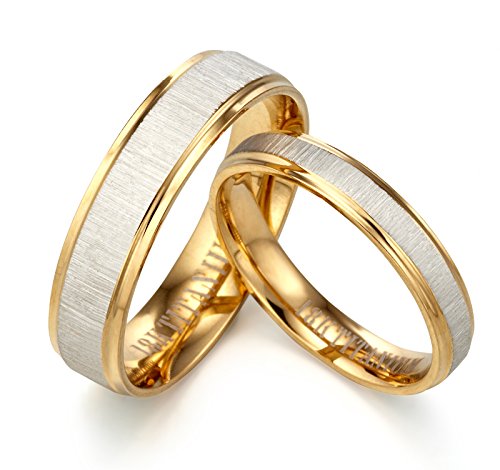
Matching Wedding Bands His and Hers
"Two rings, one story. How to choose coordinated bands that reflect who you are—together and as individuals."
Choosing wedding bands is one of the most personal decisions in the planning process. Unlike a dress or a venue, these are the pieces you will wear every single day for the rest of your life. For many couples, the appeal of matching wedding bands his and hers lies in the quiet symbolism: two rings that belong together, even when you are apart.
But "matching" does not have to mean identical. In fact, the most successful coordinated sets are the ones that respect differences in hand size, personal style, and daily routine. This guide walks you through every decision—metal, width, finish, fit, and engraving—so you can choose a pair that feels authentic to both of you.
Why Couples Choose Matching Bands
The tradition of matching wedding bands has evolved. It is no longer about rigid uniformity. Modern couples choose coordinated bands for three main reasons:
- Visual harmony: In photos and in daily life, coordinated rings look intentional. They signal partnership without shouting.
- Shared decision-making: Shopping for a matching set turns the ring purchase into a joint experience rather than two separate errands.
- Symbolic weight: A matching pair can serve as a daily reminder of the vows you exchanged. It is a private signal that you are part of a team.
If you are still exploring broader ring options, our guides to his and hers wedding bands sets and wedding ring sets his and hers offer additional context on how sets are structured.
What "Matching" Really Means
Before you shop, clarify what matching means to you as a couple. There are three common approaches:
Identical Bands
The same ring in the same width, metal, and finish for both partners. This is the simplest interpretation and works well when both partners have similar hand sizes and style preferences.
- Easiest to shop for
- Strong visual unity
- May not suit very different hand sizes
Coordinated Bands
The same metal and finish, but different widths or slight design variations. This is the most popular approach because it balances unity with individual comfort.
- Respects hand size differences
- Still looks like a pair
- Requires more deliberate selection
Thematic Bands
Different metals or designs that share a common motif—a hammered texture, a milgrain edge, or a engraved pattern. This works for couples with very different tastes.
- Maximum personal expression
- Can be harder to source
- Best with a custom jeweler
Complementary Bands
One band may have diamonds while the other is plain, but both share the same metal and profile. This is a common choice when one partner wants sparkle and the other prefers simplicity.
- Balances different preferences
- Still visually connected
- Needs careful proportion matching
💡 WeddingClever Tip: If you are ordering online, look for retailers that sell bands in "sets" or "pairs." These are pre-coordinated by the designer, so you do not have to guess whether the widths and finishes will look good together.
Metal Options for His and Hers Bands
The metal you choose sets the tone for the entire set. Here is how the most common options compare for matching pairs:
White Gold and Platinum
Bright, modern, and versatile. White gold is an alloy of gold mixed with white metals and plated with rhodium for a silver-white finish. Platinum is naturally white and denser, making it a premium choice for daily wear. Both work beautifully for men's white gold wedding bands and women's bands alike.
Yellow Gold
Classic, warm, and timeless. Yellow gold has been the traditional choice for centuries and pairs well with most skin tones. If you want a set that feels rooted in tradition, yellow gold is a strong contender. Our guide to gold and white gold wedding bands explores mixing metals if you want a two-tone look.
Rose Gold
Romantic and increasingly popular. Rose gold gets its blush hue from copper in the alloy. It flatters warm skin tones especially well and feels softer and more contemporary than yellow gold.
Titanium and Tungsten
Durable, lightweight, and budget-friendly. These metals are popular for men's bands because they resist scratching and are hypoallergenic. They can be challenging to resize, so fit is critical. If you choose titanium or tungsten for him, consider a matching finish in a more traditional metal for her.
Mix-and-match strategy: You do not have to use the same metal for both bands. A popular approach is to choose the same finish (matte, polished, or brushed) across two different metals. The shared texture creates visual unity even when the metals differ.
Style Pairings That Work
Once you have settled on metal, the next decision is style. Here are pairings that consistently work well for his and hers sets:
- Plain domed bands: The most classic pairing. A plain domed band for him and a slightly slimmer plain domed band for her. Timeless and comfortable.
- Flat profile with beveled edges: A modern, architectural look. Both bands share the same flat profile, but hers may be narrower.
- Hammered texture: A hand-forged look that hides scratches and feels artisanal. Works well in both white and yellow gold.
- Milgrain detail: Tiny beaded edges add vintage charm. A milgrain band for her paired with a plain band for him creates a subtle connection.
- Diamond accents: If she wants diamonds and he does not, choose the same band profile and add a channel or pavé set to hers only. The shared silhouette keeps the pair coordinated.
For men who want a touch of sparkle, men's wedding rings with diamonds can be paired with a simpler women's band for a reverse-dynamic set.
Width, Fit, and Comfort
Width is the most overlooked factor in matching band selection. A band that looks proportional on a larger hand may overwhelm a smaller hand. As a general guideline:
- Men's bands: Typically 4mm to 8mm wide. 6mm is a common middle ground.
- Women's bands: Typically 2mm to 4mm wide. 2.5mm to 3mm is a popular range for a delicate look.
- Proportion tip: If his band is 6mm, a 3mm band for her creates a balanced visual ratio.
Fit matters just as much as width. Comfort-fit bands have a rounded interior that makes them easier to slide over the knuckle. Standard-fit bands have a flat interior. If either partner is not used to wearing rings, comfort-fit is usually the better choice.
💡 Sizing note: Finger size fluctuates with temperature, time of day, and hydration. Get sized at the end of the day when your fingers are at their largest. If you are between sizes, size up for comfort-fit bands.
Personalization and Engraving
Engraving is what transforms a matching set into a deeply personal one. You can engrave the same message in both rings, or choose complementary messages that only make sense together.
Popular engraving ideas for matching bands include:
- Wedding date in Roman numerals
- Coordinates of where you met or married
- A short phrase from your vows
- Each other's initials
- A single word that captures your relationship
Keep in mind that wider bands offer more engraving space. If you plan to engrave a longer message, choose a wider band for both rings to keep the proportions consistent.