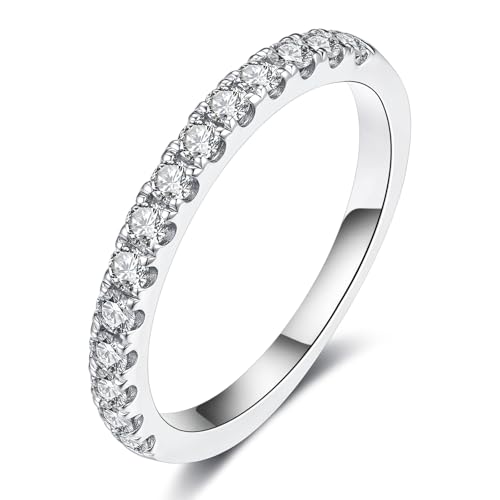
White Gold Wedding Rings for Women
“The complete guide to choosing a white gold band that fits your style, your lifestyle, and your love story.”
A white gold wedding ring is one of the most popular choices for brides in the United States and around the world—and for good reason. Its cool, silvery-white sheen flatters nearly every skin tone, it pairs beautifully with diamonds, and it offers a refined, modern look that never feels dated. Whether you are shopping for a simple band to wear alongside an engagement ring or a diamond-studded statement piece, understanding the metal, finishes, and styles available will help you choose a ring you will love for decades.
This guide walks you through everything a bride-to-be needs to know before buying a white gold wedding ring for women, from karat choices and rhodium plating to diamond settings, ring width, and long-term care. By the end, you will have a clear framework for choosing a ring that matches your style and daily routine.
Why White Gold Is a Timeless Choice
White gold is an alloy of yellow gold mixed with white metals such as palladium, silver, or nickel, then finished with a rhodium plating that gives it its bright white appearance. This combination delivers the strength and value of gold with a cool, contemporary look that has remained popular for over a century.
Compared with other bridal metals, white gold occupies a sweet spot. It is more scratch-resistant than platinum, more durable than sterling silver, and more affordable than platinum or palladium. For brides who want a bright, diamond-friendly band without the premium of platinum, a women’s wedding ring in white gold is often the practical and beautiful answer.
White gold also pairs effortlessly with other jewelry. If your engagement ring is white gold, a matching white gold band creates a seamless bridal set. If you prefer mixed metals, white gold layers beautifully with yellow gold or rose gold for a modern, personalized stack—an approach explored in our guide to his and hers wedding ring sets.
Quick comparison: White gold is harder and more scratch-resistant than platinum, but platinum is naturally white and does not require re-plating. Silver is softer and less durable for daily wear. Palladium offers a platinum-like look at a more accessible tier. For most brides, white gold strikes the best balance of beauty, durability, and long-term value.
Karat, Color & Rhodium Finish
Two details determine how a white gold ring looks and wears over time: the karat and the rhodium finish. Understanding both will help you avoid surprises after purchase.
14k vs. 18k White Gold
White gold is available in several karats, but 14k and 18k are the most common for wedding rings. The karat indicates the proportion of pure gold in the alloy. 14k white gold contains roughly 58% pure gold, making it harder and more resistant to scratches—ideal for everyday wear. 18k white gold contains about 75% pure gold, giving it a richer, warmer tone and a more luxurious feel, though it is slightly softer and more prone to scratching.
For most brides, 14k white gold is the practical choice: it holds up well to daily wear and requires less frequent polishing. Brides who prioritize a deep, luxurious color and plan to wear the ring more gently may prefer 18k. Both karats can be re-plated with rhodium to maintain a bright white finish.
The Role of Rhodium Plating
White gold in its raw alloy form has a slightly warm, yellowish-gray tone. Jewelers apply a thin layer of rhodium—a rare, white platinum-group metal—to give the ring its bright, mirror-like white finish. This plating is what most people picture when they think of white gold.
Rhodium plating wears off over time, especially on rings worn daily. Most white gold rings need re-plating every 6 to 18 months, depending on wear and body chemistry. Many jewelers offer complimentary re-plating with purchase, so always ask about this service before you buy. A ring with a thicker rhodium layer may hold its finish longer, though the difference is often modest.
Buying tip: Ask your jeweler whether re-plating is included in the purchase price and how often they recommend it. Some retailers offer lifetime re-plating, which can add significant long-term value—especially for a ring you plan to wear every day.
Popular Styles for Women
White gold wedding rings for women come in a wide range of styles, from minimalist plain bands to elaborate diamond eternity rings. The right choice depends on your personal taste, your engagement ring, and how much sparkle you want in your everyday look.
Plain Polished Band
A simple, high-polish white gold band is the most versatile option. It works beautifully alongside a solitaire engagement ring and never competes for attention. Plain bands are also the most affordable entry point into white gold, making them popular for couples building a complete bridal set. See our gold band wedding rings for women for related styles.
Diamond-Cut & Milgrain Bands
Diamond-cut edges catch the light with tiny facets, while milgrain detailing adds a vintage, handcrafted feel. These bands offer more visual interest than a plain polish without the cost of full diamond coverage. They pair especially well with vintage-inspired engagement rings.
Channel-Set Diamond Band
A row of diamonds set flush between two white gold rails creates a sleek, modern look with no prongs to snag on clothing. Channel-set bands are practical for daily wear and offer a continuous line of sparkle. They are a popular choice for brides who want diamonds without a delicate setting.
Eternity & Half-Eternity Bands
Eternity bands feature diamonds set all the way around the ring, symbolizing unending love. Half-eternity bands set diamonds only across the top, which is more comfortable and easier to resize. These are among the most popular premium styles for brides who want maximum sparkle. Explore our white gold and diamond wedding band collection for inspiration.
Twisted & Braided Bands
Intertwined strands of white gold—sometimes accented with diamonds—create a romantic, organic look. Twisted bands are ideal for brides who want a ring with movement and texture. They pair beautifully with simple solitaires and stand on their own as a statement piece.
Vintage & Halo-Inspired Bands
Ornate filigree, scalloped edges, and halo-inspired diamond clusters give these bands a heirloom quality. They are often chosen by brides who want a ring that feels like a piece of history. Pair them with a matching vintage engagement ring for a cohesive bridal set.
Diamond Settings & Stone Shapes
If you are considering a diamond wedding band, the setting and stone shape matter as much as the metal. The right combination will maximize sparkle, comfort, and durability.
Common Settings
Prong setting lifts the diamond above the band, allowing maximum light to enter and sparkle. It is the most traditional and brilliant setting, but prongs can snag on clothing. Bezel setting wraps the diamond in a metal rim for a sleek, protective look—ideal for active brides. Channel setting seats diamonds flush between two rails, offering a smooth profile with no snagging. Pavé setting places tiny diamonds closely together for a continuous shimmer, often used on the band’s shoulders.
Stone Shapes
Round brilliant diamonds remain the most popular choice for wedding bands because they offer the most sparkle. Oval and emerald-cut stones create an elegant, elongated look. Princess-cut stones add a modern edge, while marquise and pear shapes offer vintage romance. For a band, smaller stones in round or oval shapes are the most practical and comfortable for daily wear.
If you are building a complete bridal look, consider how your wedding band will sit alongside your engagement ring. A contoured or curved band fits snugly around a solitaire’s setting, while a straight band creates a clean, modern line. Many jewelers offer custom-curved bands to match a specific engagement ring—a service worth asking about. For more inspiration on pairing rings, see our guide to wedding rings and engagement rings.
Comfort Fit, Width & Sizing
The inside of a wedding band matters as much as the outside. A comfort-fit band has a gently rounded interior that slides on easily and feels smooth against the finger, while a standard-fit band has a flat interior. Comfort fit is especially popular for wider bands, where the difference in feel is most noticeable.
Band width typically ranges from about 1.5mm to 6mm for women’s rings. Narrower bands (1.5–2.5mm) feel delicate and pair well with engagement rings, while wider bands (3–4mm) make a bolder statement and offer more room for diamond settings. Consider how the band will look alongside your engagement ring and whether you plan to stack multiple rings.
Sizing is critical. White gold rings can be resized, but bands with diamonds set all the way around (full eternity) cannot be resized without significant work. If you are unsure of your size, get measured by a jeweler at the end of the day, when fingers are typically at their largest. Avoid sizing when you are very cold or very hot, as temperature affects finger size.
Sizing note: If you plan to wear your wedding band on the same finger as an engagement ring, have both rings sized together. A thicker band or a ring with a wider profile may require a slightly larger size than a thin band.
Care, Maintenance & Re-Plating
White gold is durable, but it is not maintenance-free. The rhodium plating that gives it its bright white finish will gradually wear away, revealing the slightly warmer tone of the underlying alloy. How quickly this happens depends on how often you wear the ring, your body chemistry, and the thickness of the original plating.
To keep your ring looking its best, clean it regularly with warm water, mild dish soap, and a soft brush. Avoid harsh chemicals, chlorine, and abrasive cleaners, which can damage the rhodium layer. Remove your ring before swimming, cleaning, or applying lotion. Store it separately from other jewelry to prevent scratches.
Plan for re-plating every 6 to 18 months. Many jewelers offer this service, and some include it free with purchase. Re-plating is a quick process—usually a few days—and restores the ring’s original bright white finish. If you want a metal that never needs re-plating, platinum or palladium may be a better fit, though they come at a higher tier. Our white gold engagement rings for women guide covers similar care considerations for engagement pieces.
Buying Checklist
Before you commit to a white gold wedding ring, run through this checklist to make sure you have considered every important detail:
- Karat: Choose 14k for durability or 18k for a richer color and softer feel.
- Rhodium: Confirm the ring is rhodium-plated and ask about re-plating services.
- Style: Decide between plain, diamond-cut, channel-set, eternity, or vintage styles.
- Diamond details: If applicable, check stone shape, setting type, and diamond quality.
- Width: Choose a width that complements your engagement ring and feels comfortable.
- Fit: Consider comfort fit, especially for wider bands.
- Sizing: Get measured professionally and size both rings together if wearing as a set.
- Resizing policy: Ask whether the band can be resized, especially for eternity styles.
- Warranty: Check what the jeweler covers, including re-plating and stone tightening.
- Return policy: Confirm the return window and any restocking fees.
For a broader look at bridal ring options, including matching sets for couples, explore our wedding rings for couples and wedding rings for him and her collections.